
In 1999, every every high school in CMS had a Latin program. 26 years later, only two classes are left.
It’s no mystery where all of these programs went. A combination of decreasing student interest, redistricting, lack of daily usefulness and changes in district goals all contributed to the rapid dwindling.
Christopher Cudabac was Myers Park’s only Latin teacher before his move to East Meck. He taught six levels of Latin: standard 1 through 3. IB SL 1 & 2 and IB HL. The program was already small, but redistricting drew away a large pool of potential students.
“Enrollment wasn’t there I’ve been in schools long enough to know that you can’t maintain a program with a teacher who only sees 30 students a day,” Cudabac said. His classes became much smaller, but he was still determined to teach who he could. He placed a heavy focus on literature and analysis, exposing his students to untranslated Latin texts.
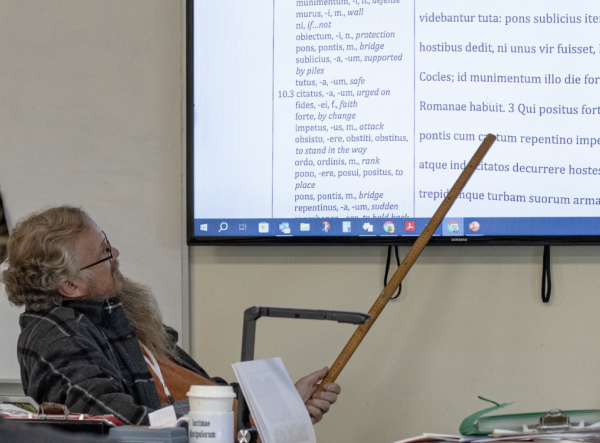
“Reading literature in translation is like having to kiss someone dear to you through a glass window. You understand clearly what is being meant, but it’s not the same,” Cudabac said.
Having witnessed other Latin programs disappear around him, he is aware of the district’s part in Latin’s decline. “The testing emphasis on reading and math has sucked the life out of so many other subjects…that’s where schools get graded, and so that pushes other courses to the side.” The focus in CMS schools has shifted in recent years to the STEM pathway, leaving the humanities in its dust. History, world languages and social studies have moved to the back of the district’s mind.
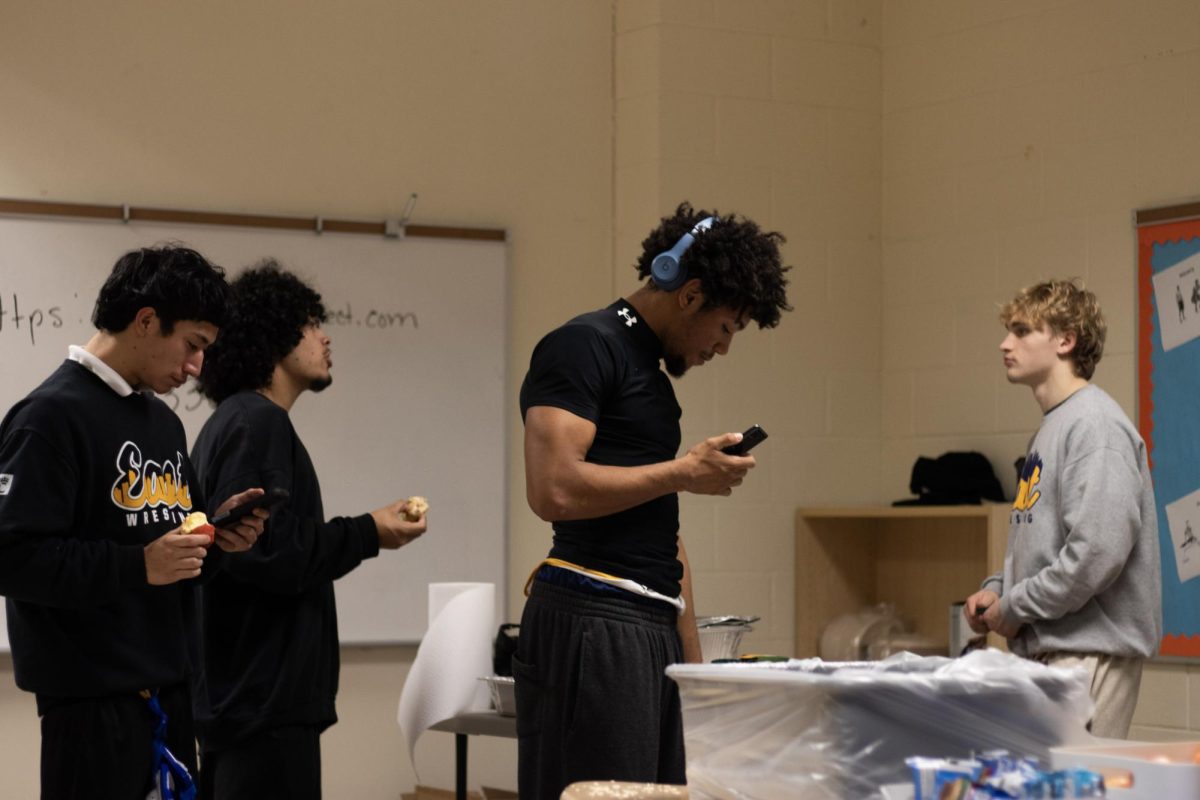
Eric Oates is East’s sole Latin teacher, and he holds the same responsibilities as Cudabac once did. “The difficult part of it is that you have to teach all the levels. The good part of it is that I get to know the students a bit better.”
Latin 1 is his largest class, but the numbers significantly drop after that. Oates believes that this is fairly typical given the number of tracks that East offers to juniors and seniors and the difficulty of the higher levels.
“If you’re a true IB student, you take that challenge as it is. But those who are [in CP or non-IB] don’t necessarily need to.” In his classes, Oates focuses on breaking down the grammar and vocabulary, also teaching lessons on Roman culture which many of his students enjoy.
Students perspectives on Latin vary. Some believe it’s easy because of the lack of a speaking component, a dreaded aspect of other language classes. Others believe it’s more complicated due to the absence of modern words, which makes building sentences difficult. Latin is a dead language– a language that no longer has any living native speakers– which makes conversations about anything but the ancient world very hard.
“There’s only a set amount of words because it’s an old language, so it’s easier to just memorize all of the vocabulary,” said Freshman Aron Landsen.
Latin offers an unexpected emotional benefit: connection. Despite belonging to ancient times, there are more similarities between today’s society and Roman civilization than students may think. “What’s so powerful about Latin is finding an emotional resonance across 2000 years of history and finding so much commonality with people who are so different,” Cudabac said. “All of these troubles and problems, they’re not particular to our time. These are human problems.. these are human experiences that transcend through time.”
Although it’s unlikely to happen, Oates and Cudabac would support a move to push Latin back into schools, especially in middle schools, as it can set students up for success in other subjects later. Latin often goes overlooked by student , but it offers more value than most would assume. Choosing Latin leads to small class sizes, but most of all, it leads to a deeper connection with humanity and its development as a whole.