


When you look at some eighth-grader’s botched drawing of an anime character, how do you know it’s bad art? And when you look at a professional’s abstract piece, characterized by messy streaks of paint and randomly placed splotches, how do you know it’s good art? Maybe because one hangs on a museum wall and one sits on the desk of a middle-school art teacher. Maybe. Or maybe there’s just something inside you that tells you Sailor Moon’s eyes shouldn’t be bigger than her face.
The truth is, we all judge art based on our personal preferences, and that’s fair enough. But in the position of an art grader, how does one critique using an objective standard, without imposing personal biases?
Rubrics that are supposedly unbiased often favor realistic art, as it is easier to judge against a standard compared to stylized art. There’s an exact way to pinpoint a student’s success: how accurate is the drawing to real life?
This is why, in academic spaces, realism is encouraged. It’s often seen as a necessary skill to develop in order to become an “artist.”
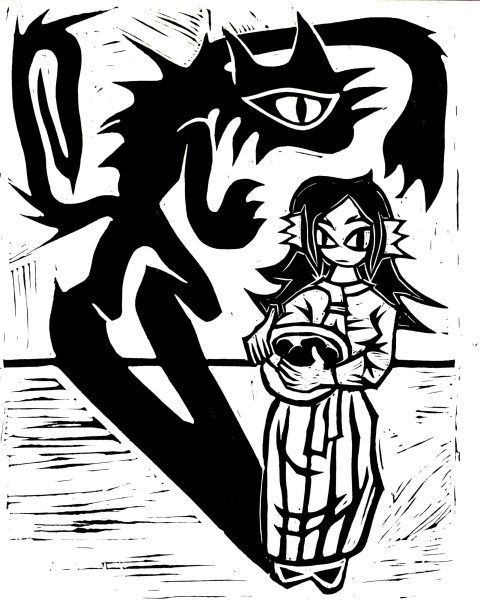
It’s no surprise, then, that senior artist Alexis Young, who has been taking art classes since she was little, has naturally developed a taste for realism. Alternatively, Nora Rubin, who taught herself how to draw, has become an artist with a more ‘cartoonish’ style: “an attack on paper.”
While these foundational institutions may encourage artists to conform to realism, art schools tend to discard this aesthetic as “unoriginal.” This creates a confusing message for artists navigating through their educational careers.
So, what makes art graders prefer one style over the other? Rubin explains a common critique of stylized artwork is that it’s “unable to convey complexity or emotion.” She argues that this belief is narrow-minded, asking these realistic-style artists, “Why limit your art solely to what’s conceivable?”
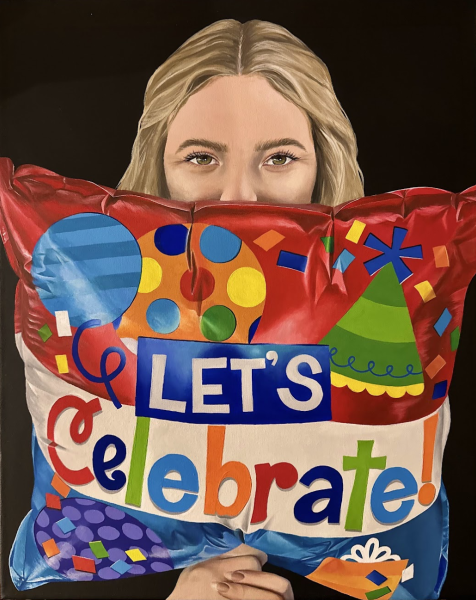
Others say realistic art, more often than not, fails to capture reality, inevitably becoming an idealized version of what is really in front of us. We extract just enough realism out of life’s images to put onto a canvas, as to avoid creating something unbeautiful.
With such strong opinions circulating throughout the art community, how have professional graders managed to avoid these biases?
Tinashe Vincent, an art teacher at East, explains that before 2020, AP art students had to “crank out 24 masterpieces” by the end of the school year for digital submission. Now, there is more emphasis on progress requiring evidence of experimentation and revision. With this rubric, focused on the journey rather than the outcome, the potential for bias is eliminated, but at the expense of any credit for technical skill or aesthetics. It seems impossible to formulate the perfect rubric for art, but maybe that’s because art was never meant to be judged with mathematical formulas and limiting rubrics.
Thousands of years before written language was developed, our ancestors relied on art to transform thought into something concrete and understandable, communicating abstract messages that words could not sufficiently describe.
And after all these years, art serves the same purpose: expressing the seemingly inexpressible. The means through which an artists does this may look different, but this diversity is something to be appreciated.
Of course, art needs to be graded in order for art education to exist. So what do we do? We should reward artists who express passion through their craft, pour effort into their work and who are not afraid to try new things. This cannot be judged through a digital submission of photographs and written explanations, or by a final product tossed on your desk. To understand the actual grade an artist deserves, you must observe their process carefully and witness first-hand their dedication to their project. This is the way to.


Rosabella R. • May 21, 2026 at 3:24 pm
I agree that there is no way to grade an artist fairly. Every artist has their own style, standard, and quirks. How could you define one persons art style to someone else’s in the same rubric? When it comes to art there is so good or bad, just different styles, art is all about perspective and feeling. Thats something difficult to put a grade on.
salvador p • May 19, 2026 at 1:50 pm
i thinnk that its not so necessary to grade art work beacuse for one, art is supposed to be admired because of the creativity and the thought that was put into it. secondly grading art can cause some of the artists to be less motivated because they would consistently be worry if there work would be subpar or bad. but there is also the argument that it could be good to grade the art, so if hypothetically someone just turns in a picture of a stick figure, they wouldn’t get any credit
Bella Grant • May 19, 2026 at 10:41 am
Since there are many different styles and traditions of art, I do find myself wondering about how someone can look at someone’s carefully crafted piece of art, and ruin it with ugly red marks earned from a teacher who calls it “grading”. So, back to the point of the article–is grading art really necessary? In my opinion, no. Everyone has different ways of creating their own art pieces, and calling it “bad” or “inappropriate” based on your personal affections for art can really hurt someone’s feelings, especially if they worked hard on it for a long time.
Realism can be a way for many students who don’t particularly fit into the traditional art system to really express themselves through their work, because that’s what art is about–self expression.
Micah S. • May 7, 2026 at 1:48 pm
I agree that there isn’t a good way to unbiasly grade a piece of art because it is all based on personal preference. It reminds me of that scene in Dead Poets Society when Robin William’s character tells all the students to rip out the pages where it tells you how to grade poems. Any piece of artistic expression can’t be graded objectively because they all appeal to different people for different reasons. I also agree that grading based on witnessing the process is the best way in a school setting. However, like how realism isn’t true to what is seen as artistic in an art school, this system isn’t true to the world’s grading system of art because they don’t get to see the passion, process, and thought behind the art piece, they only get to see the final product.
Elisha C. • May 5, 2026 at 1:45 pm
I agree that judging art is extremely difficult because standards often reflect on personal bias. I say this because I have friends in art who have complained about the way they were graded, and how it seemed unfair because it was based on what the teacher liked. I also think that art should be assessed less by rigid rubrics, but more by the artist’s process and effort. Since art is all about self-expression.
Alex Broadway • May 5, 2026 at 1:15 pm
I’ve always wondered about the grading system of art. How do you put a score on an individual’s, individual piece of art? How do you grade someone’s unique creation? I agree that art should all be about the process and exploration of your own skills, especially if you want to learn how to do art. As someone who wants to learn how to draw, realistic art always intimidated me, and I found more excitement in seeing other people’s various art styles because it made me feel like art was a inclusive hobby. I don’t believe that anyone is good or bad at art, some are just in different stages of the art process and that’s okay.